
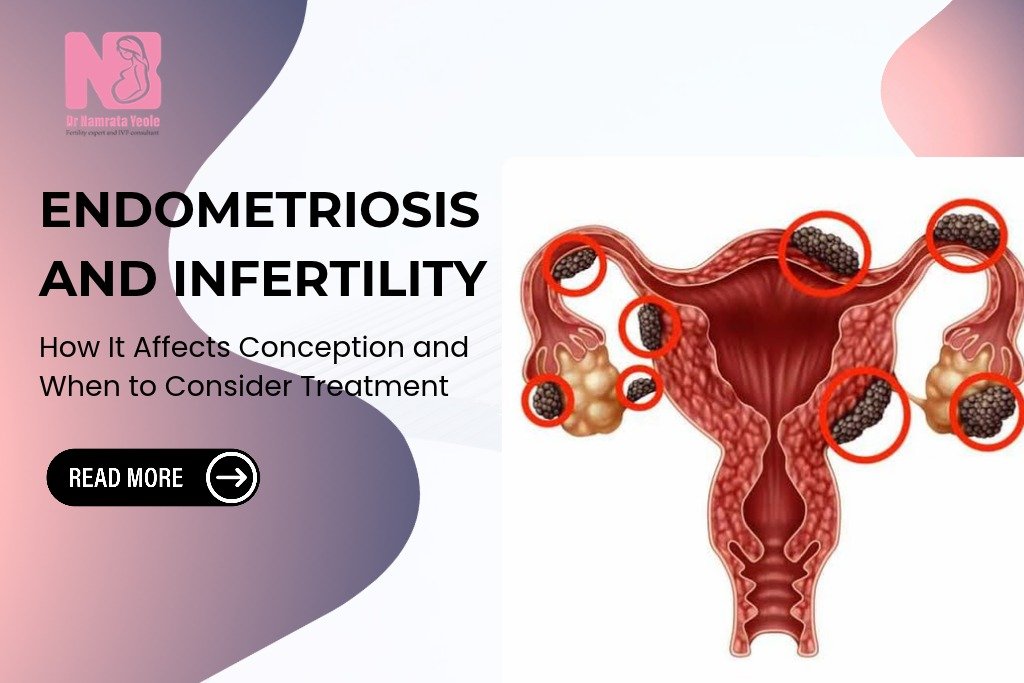
Endometriosis is a common gynaecological condition that can affect a woman’s reproductive health and ability to conceive. It occurs when tissue similar to the lining of the uterus grows outside the uterus, causing inflammation, pain, and sometimes fertility problems. Although having endometriosis does not automatically mean a woman will experience infertility, it can make conception more challenging for some women. Consulting the best IVF specialist in Greater Noida can help couples understand their fertility options and choose an appropriate treatment plan.
What Is Endometriosis?
Endometriosis develops when tissue similar to the endometrium grows in areas such as the ovaries, fallopian tubes, pelvic lining, or other nearby organs. This tissue responds to hormonal changes during the menstrual cycle and may cause inflammation, irritation, and scar tissue formation.
Common symptoms include painful periods, chronic pelvic pain, pain during intercourse, and discomfort during bowel movements or urination, particularly around menstruation. Some women experience no noticeable symptoms and discover the condition only when investigating difficulties with conception.
Women experiencing persistent pelvic pain or struggling to become pregnant may benefit from an evaluation by the best IVF specialist in Greater Noida to identify potential causes and discuss suitable fertility treatments.
How Does Endometriosis Affect Fertility?
Endometriosis can affect fertility in several ways. The impact depends on the location and severity of the condition, a woman’s age, ovarian reserve, and other reproductive health factors.
1. Inflammation in the Pelvic Area
Endometriosis can trigger inflammation around the reproductive organs. Changes in the pelvic environment may interfere with normal interactions between the egg, sperm, and reproductive tissues, potentially reducing the chances of conception.
2. Blocked or Damaged Fallopian Tubes
Scar tissue and adhesions caused by endometriosis can distort the pelvic anatomy or interfere with the fallopian tubes. Since fertilisation usually occurs in a fallopian tube, damage or blockage can make natural conception more difficult.
3. Ovarian Endometriomas
Endometriomas are cysts associated with endometriosis that develop in the ovaries. They may affect ovarian function, and the condition itself or surgery to remove these cysts can sometimes reduce ovarian reserve.
A fertility specialist may recommend an assessment of ovarian reserve and other fertility factors before deciding whether surgery or assisted reproductive treatment is appropriate.
4. Possible Effects on Egg Quality and Implantation
Inflammation and changes in the reproductive environment may influence egg development, fertilisation, or implantation in some women. However, the relationship between endometriosis and these processes is complex, and the effects vary from person to person.
Seeking advice from the best IVF specialist in Greater Noida can help couples understand how the condition may affect their individual chances of pregnancy.
Can You Get Pregnant Naturally With Endometriosis?
Yes, many women with endometriosis conceive naturally. The likelihood depends on several factors, including age, the severity of the condition, fallopian tube health, ovarian reserve, and sperm quality.
Women with mild endometriosis and no significant damage to their reproductive organs may have a reasonable chance of conceiving without fertility treatment. However, women with advanced disease, blocked fallopian tubes, reduced ovarian reserve, or additional fertility concerns may need medical assistance.
A fertility evaluation can help identify the most appropriate next step. The best IVF specialist in Greater Noida can review medical history, previous pregnancy attempts, and test results to develop a personalised conception plan.
How Is Endometriosis-Related Infertility Diagnosed?
Diagnosis generally involves reviewing symptoms, medical history, and reproductive health. Depending on individual circumstances, doctors may recommend:
- Pelvic examination: To assess tenderness, masses, or other possible signs of endometriosis.
- Ultrasound: To identify ovarian endometriomas and assess pelvic structures. A normal ultrasound does not rule out all forms of endometriosis.
- Fertility tests: These may include ovarian reserve assessment, ovulation evaluation, fallopian tube testing, and semen analysis.
- Laparoscopy: In selected cases, minimally invasive surgery may be considered to confirm the diagnosis or treat endometriosis.
The choice of tests depends on symptoms, age, duration of infertility, and treatment goals. Consulting the best IVF specialist in Greater Noida can help couples avoid unnecessary investigations and focus on tests that may influence treatment decisions.
Treatment Options for Endometriosis and Infertility
Treatment is based on the severity of symptoms, fertility goals, age, and other medical findings.
1. Medication and Symptom Management
Pain-relieving medicines and hormonal treatments may help manage endometriosis symptoms. However, hormonal suppression generally prevents conception while it is being used and is not a fertility-enhancing treatment for women actively trying to become pregnant.
2. Surgery
Laparoscopic surgery may be considered to remove endometriosis lesions, release adhesions, or treat selected ovarian cysts. Surgery may improve pelvic anatomy or relieve pain, but it does not guarantee pregnancy. Surgery involving the ovaries can also reduce ovarian reserve, so the potential benefits and risks should be carefully evaluated.
3. Fertility Treatments
Depending on the individual’s condition, treatment options may include ovulation induction, intrauterine insemination (IUI), or in vitro fertilisation (IVF). IVF may be considered when the fallopian tubes are damaged, other fertility factors are present, previous treatments have not succeeded, or age and ovarian reserve make timely treatment important.
The best IVF specialist in Greater Noida can explain the expected benefits, limitations, costs, and possible risks of each option before treatment begins.
When Should You Consider IVF?
Consider a fertility consultation if you have diagnosed endometriosis and have been trying to conceive without success, particularly if you are over 35, have severe disease, damaged fallopian tubes, reduced ovarian reserve, or a history of unsuccessful fertility treatment.
Women under 35 are generally advised to seek an infertility evaluation after 12 months of regular unprotected intercourse. Women aged 35 or older should generally seek evaluation after six months. Those over 40 or with known fertility conditions, including endometriosis, may benefit from earlier assessment.
An early consultation with the best IVF specialist in Greater Noida can help determine whether continuing to try naturally, considering surgery, or proceeding with assisted reproduction is the most suitable option.
Conclusion
Endometriosis can affect fertility through inflammation, adhesions, ovarian cysts, and changes in reproductive function. However, many women with this condition can still become pregnant naturally or with appropriate fertility treatment. Early evaluation, an accurate diagnosis, and an individualised treatment plan can help improve decision-making and avoid unnecessary delays.
If endometriosis is affecting your conception journey, consult the best IVF specialist in Greater Noida to understand your fertility status and explore treatment options tailored to your needs.
Frequently Asked Questions (FAQs)
1. Can endometriosis cause infertility?
Yes, endometriosis can reduce fertility by causing inflammation, adhesions, fallopian tube damage, or ovarian problems. However, many women with endometriosis conceive naturally.
2. Can I get pregnant naturally if I have endometriosis?
Yes. Natural conception is possible, particularly in women with mild disease and no major reproductive complications. Individual chances depend on age, ovarian reserve, tubal health, and other fertility factors.
3. Is IVF effective for endometriosis-related infertility?
IVF can help many women with endometriosis conceive, particularly when other fertility treatments are unsuitable or unsuccessful. Outcomes depend on factors such as age, ovarian reserve, and the severity of the condition.
4. Does surgery for endometriosis improve fertility?
Surgery may improve fertility in selected cases by removing lesions or releasing adhesions. However, it is not appropriate for everyone and may reduce ovarian reserve, especially when ovarian endometriomas are removed.
5. When should I see a fertility specialist for endometriosis?
Consider an early consultation if you have endometriosis and are planning pregnancy, experiencing difficulty conceiving, or have severe pelvic pain or known fertility complications. A specialist can help determine the right timing and treatment approach.
