
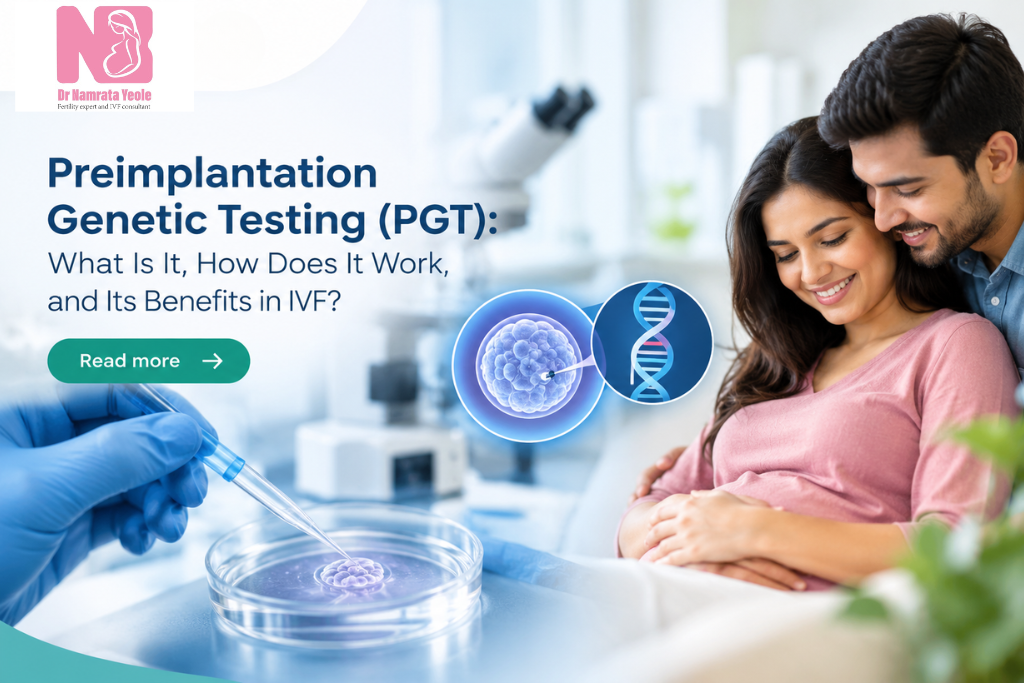
For couples undergoing in vitro fertilization (IVF), genetic testing can provide additional information about embryos before one is selected for transfer. Preimplantation Genetic Testing (PGT) is an advanced technique that examines embryos for specific genetic or chromosomal abnormalities before implantation. It may be considered in selected IVF cases based on medical history, age, previous pregnancy outcomes, or known genetic conditions.
If you are considering IVF and want to understand whether PGT may be appropriate for your treatment, consulting a Best IVF Specialist in Greater Noida can help you understand the available options and their potential benefits.
What Is Preimplantation Genetic Testing?
Preimplantation Genetic Testing is performed on embryos created through IVF. After fertilization, embryos are allowed to develop in the laboratory until they reach the blastocyst stage. A small number of cells are then carefully removed from the embryo and sent to a specialized laboratory for genetic analysis.
The embryo itself is generally kept in the IVF laboratory while the genetic testing is performed. Based on the test results, the fertility team can discuss which embryos may be suitable for transfer.
A Best IVF Specialist in Greater Noida can explain the different types of PGT and determine whether genetic testing fits your individual treatment plan.
Types of PGT
PGT is generally divided into three major categories:
1. PGT-A
Preimplantation Genetic Testing for Aneuploidy, or PGT-A, evaluates embryos for abnormal numbers of chromosomes. Chromosomal abnormalities can sometimes affect embryo implantation or increase the risk of miscarriage.
2. PGT-M
PGT for Monogenic disorders, or PGT-M, is used when a specific inherited genetic condition is known within a family. It may help identify embryos that are less likely to be affected by that particular genetic disorder.
3. PGT-SR
PGT for Structural Rearrangements, or PGT-SR, is used when one or both prospective parents have certain chromosomal structural abnormalities, such as balanced translocations. Testing can help identify embryos with an appropriate chromosomal structure for transfer.
A Best IVF Specialist in Greater Noida can recommend the appropriate type of testing after reviewing your medical and family history.
How Does PGT Work During IVF?
PGT is performed as part of an IVF cycle and usually involves several steps:
1. Ovarian stimulation:
Medications are used to stimulate the ovaries so multiple eggs can develop.
2. Egg retrieval:
The mature eggs are collected through a planned medical procedure.
3. Fertilization:
The eggs are fertilized with sperm in the laboratory. Depending on the case, conventional IVF or intracytoplasmic sperm injection (ICSI) may be used.
4. Embryo development:
The resulting embryos are monitored as they develop. Suitable embryos may reach the blastocyst stage after several days.
5. Embryo biopsy:
A small sample of cells is carefully collected from the embryo for genetic testing.
6. Genetic analysis:
The sample is analyzed in a specialized laboratory according to the selected type of PGT.
7. Embryo transfer:
After the results are reviewed, an embryo considered appropriate for transfer may be selected. In many PGT cycles, embryos are frozen while testing is completed, followed by a later frozen embryo transfer.
A Best IVF Specialist in Greater Noida can guide patients through each stage and explain what the test results mean for their individual circumstances.
What Are the Potential Benefits of PGT?
PGT can provide useful genetic information before embryo transfer. Depending on the patient’s circumstances, potential benefits may include:
- Identifying certain chromosomal abnormalities: PGT-A can identify embryos with chromosome-number abnormalities.
- Reducing the chance of transferring an embryo affected by a known genetic condition: PGT-M can be useful for families at risk of specific inherited disorders.
- Supporting embryo selection: Genetic information can provide an additional factor when the fertility team considers which embryo to transfer.
- Potentially reducing miscarriage related to certain chromosomal abnormalities: In selected patients, identifying embryos with chromosomal abnormalities may help inform treatment decisions.
- Family planning support: PGT can be particularly relevant when prospective parents have a known genetic or chromosomal concern.
It is important to understand that PGT does not guarantee pregnancy or a healthy baby. A Best IVF Specialist in Greater Noida can discuss the potential advantages, limitations, costs, and alternatives before testing is undertaken.
Who May Consider PGT?
PGT may be considered in certain situations, including a known family history of inherited genetic disorders, previous pregnancies affected by specific genetic conditions, recurrent pregnancy loss in selected cases, certain chromosomal rearrangements, or other circumstances identified during fertility evaluation.
However, PGT is not automatically necessary for every IVF patient. The decision depends on individual medical factors and the type of genetic testing being considered.
Discussing your options with a Best IVF Specialist in Greater Noida can help determine whether PGT is medically relevant to your IVF journey.
Is PGT Safe?
Embryo biopsy is performed using specialized laboratory techniques designed to minimize harm to the embryo. However, like all medical procedures, PGT has limitations. Genetic testing may not detect every possible genetic condition, and test results may sometimes be inconclusive.
Because PGT examines a small number of cells from an embryo, the result may not perfectly represent every cell in that embryo. Genetic counseling may therefore be recommended, particularly when PGT-M or PGT-SR is being considered.
A Best IVF Specialist in Greater Noida can coordinate with embryologists and genetic specialists to help you understand the testing process and results.
PGT and Your IVF Journey
Preimplantation Genetic Testing can be a valuable option for carefully selected IVF patients. By providing genetic information about embryos before transfer, it may help fertility teams and couples make more informed decisions about embryo selection.
If you are considering PGT, speak with a Best IVF Specialist in Greater Noida about your medical history, fertility goals, genetic risks, and available testing options. Individualized counseling is important because PGT has both potential benefits and limitations.
Choosing a Best IVF Specialist in Greater Noida can help ensure that your IVF treatment is planned according to your individual reproductive and genetic needs.
Frequently Asked Questions
1. Is PGT performed before embryo transfer?
Yes. PGT is performed on cells collected from an embryo before the embryo is selected for transfer.
2. Does PGT guarantee a successful pregnancy?
No. PGT cannot guarantee implantation, pregnancy, or a healthy birth.
3. Is PGT required for every IVF cycle?
No. PGT is recommended only in selected situations based on individual medical and genetic factors.
4. Can PGT detect all genetic diseases?
No. The type of PGT determines which genetic or chromosomal conditions can be evaluated.
5. How long does PGT testing take?
The timing can vary depending on the laboratory, type of test, and treatment plan. Your fertility team can provide a specific timeline.
